
Page Contents
- 1 Details: GMG Pellet Grill Meat Temperature Pro…
- 2 Advantages
- 3 Notice
- 4 Buyer Guide meat thermometer
- 5 How to choose meat thermometer
- 6 How to maintain meat thermometer
- 7 Review Hello Grill Meat Injector Syringe Kit - 3 Professional BBQ Injector Needles - Metal Marinade ...
- 8 Review Alinory Thermometer, LCD Digital Food Meat Thermometer with Foldable Probe Kitchen Cooking BB...
- 9 Review GAOYH Digital Food Candy Meat Thermometer, Cooking Kitchen Instant Read Thermometer with 3.95...
- 10 Review Paris Rhône Meat Thermometer Wireless, 300ft Meat Thermometer Digital, Food Thermometer with ...
Details: GMG Pellet Grill Meat Temperature Pro…
Brand: Green Mountain Grills
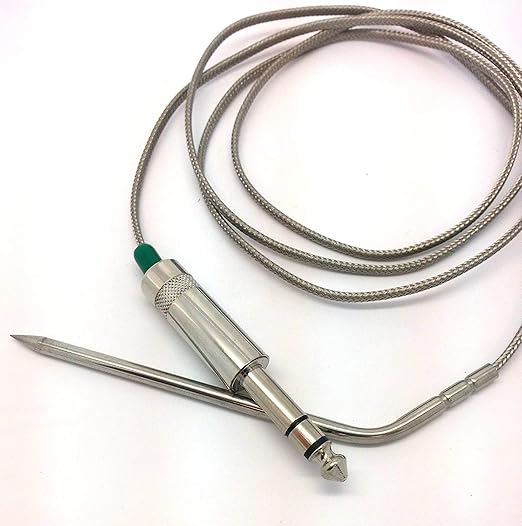
Green Mountain Grill Meat Temperature Probe is a perfect addition to your grill accessory collection! Cook your meats to perfect temperature every time with no guessing! Plugs directly into the front of the control panel. This is a factory part and works with the Jim Bowie, Daniel Boone, and Davy Crockett pellet grills that are equipped with this accessory. Part number P-1035 or GMGP40

Advantages
- Products can be returned
- Make sure this fits by entering your model number.
- This Meat probe only works with GMG Choice Grills
- Fits Jim Bowie, Daniel Boone, Davy Crockett Choice Pellet Grills
- 110v for choice models
- part # 3001 — UPC 837654296004
Notice
- Is an online purchase
- Delivery may be delayed in some areas.

Buyer Guide meat thermometer
When buying a meat thermometer, there are a few things you should consider first.- Price. Price is the first thing you should consider. The more expensive the thermometer, the better it will be.
- Temperature Range. The temperature range of the thermometer will determine the kinds of meats you can cook.
- Accuracy. Accuracy is very important as well. The thermometer’s accuracy will determine how well it will cook the meat.
- Look. The thermometer’s look is also important.
How to choose meat thermometer
A meat thermometer measures the internal temperature of the meat to ensure it’s cooked thoroughly. If you plan on cooking steaks, roasts, pork chops, chicken breasts, or other meats, a meat thermometer will help you cook them evenly and consistently.- Length: The longer the meat thermometer, the better. The longer the thermometer, the easier it will be for you to check the temperature of the meat.
- Knob: Meat thermometers with a knob are easier to handle. A knob also makes turning the thermometer easier, especially if yours is battery-operated.
- Battery life: With most meat thermometers, you’ll want to invest in ones that have rechargeable batteries.
- Temperature range: Ideally, the temperature range of your meat thermometer should cover any temperature you plan on cooking your meat to.
- Accuracy: Most meat thermometers are accurate to 2?F. The accuracy of your thermometer will depend on how accurate the thermometer you use is.
How accurate is the thermometer?
- A good meat thermometer will register when the meat reaches 160?F.
- A mediocre meat thermometer will register when the meat reaches 140?F.
- A bad meat thermometer will register when the meat reaches 130?F.
How to maintain meat thermometer
If you eat a lot of meat, a good meat thermometer is an essential kitchen tool. You can use a meat thermometer to check the internal temperature of any meat youre cooking.- Use a digital meat thermometer if youre only cooking for one or two people. Digital thermometers have small screens that show the temperature reading, and a digital readout makes it easy to set and retrieve a precise internal temperature. If youre cooking meat for a larger group, a digital meat thermometer may not be the best option.
- Use a meat thermometer with a probe. A probe-style meat thermometer allows you to insert the tip of the thermometer directly into the meat. These thermometers are a bit more delicate than digital meat thermometers, so its important to handle the probe with care.
- Wash your meat thermometer. Before storing your meat thermometer, be sure to wash it with hot, soapy water to remove any leftover food particles.
- Store your meat thermometer in a cool, dry place. If you store it in the refrigerator, be sure to avoid placing the probe tip directly in the vegetable drawer, as the temperature in there can be much hotter than the rest of the refrigerator.
- Keep your meat thermometer clean. Before you store or use your meat thermometer, be sure to remove any pieces of food and wipe it down with a moist towel to remove any buildup.
Related posts:
Review Hello Grill Meat Injector Syringe Kit - 3 Professional BBQ Injector Needles - Metal Marinade ...
Review Alinory Thermometer, LCD Digital Food Meat Thermometer with Foldable Probe Kitchen Cooking BB...
Review GAOYH Digital Food Candy Meat Thermometer, Cooking Kitchen Instant Read Thermometer with 3.95...
Review Paris Rhône Meat Thermometer Wireless, 300ft Meat Thermometer Digital, Food Thermometer with ...

FBIA TEAM
Admin Tle Chubby man who loves technology and the changes in the world around him. (Around Me)